Stored XSS via a scanned document
Dev environment on vuln.patholux.magyar.studio. The payload is real; the seeded patient and user data are fake.
1. The pathologist opens the incoming scan
The file was imported with Content-Type: video/mp4, text/html. The preview cannot handle that type, so it falls back to an “open in new tab” link.
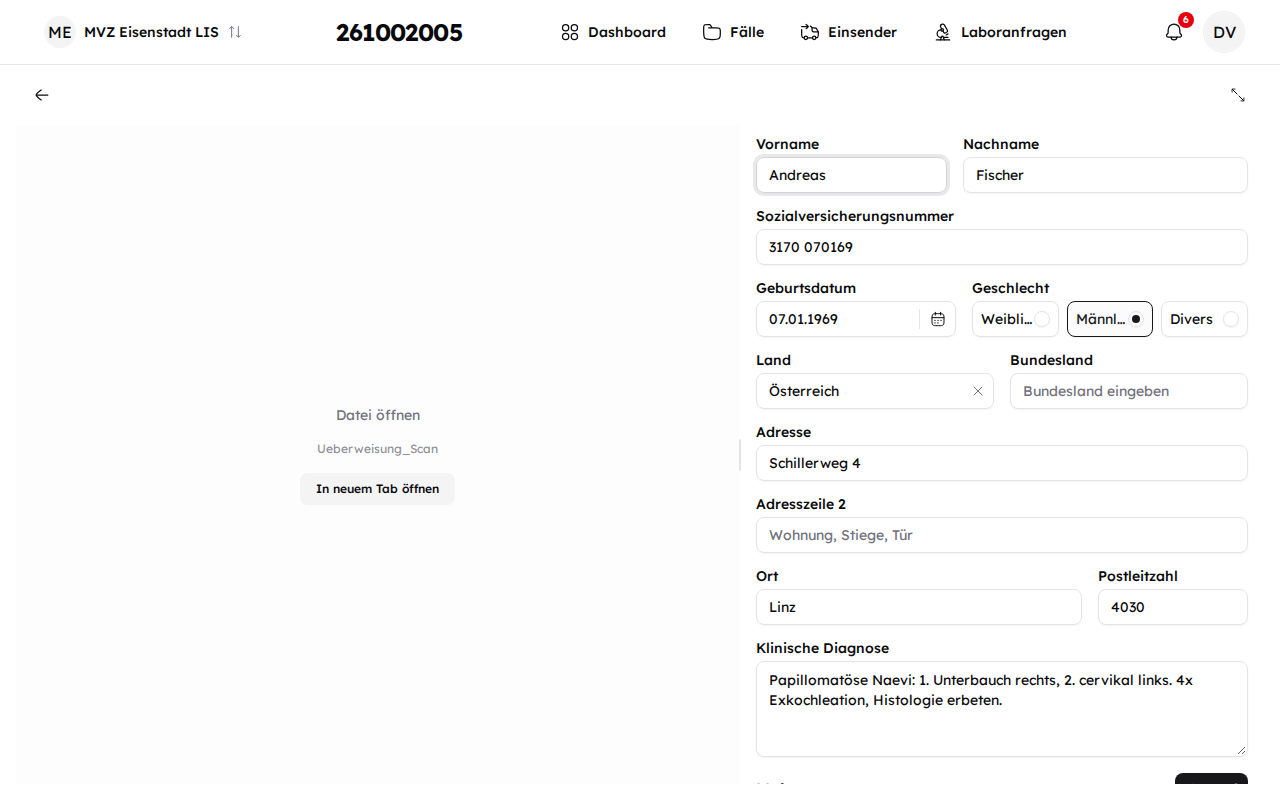
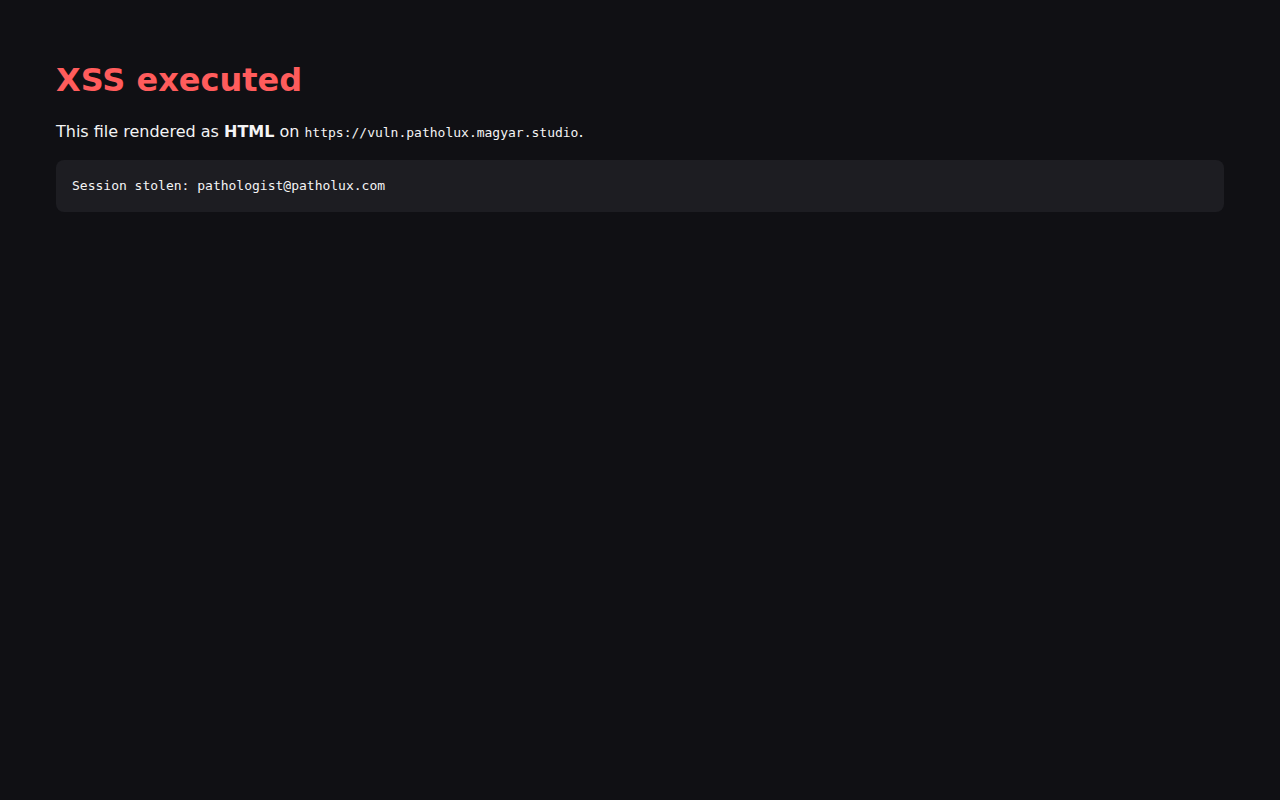
2. The link renders as HTML and reads the session
The file URL is served from the app origin. Chrome takes the last type in the comma list, renders the body as HTML, and the script reads /api/auth/get-session.
3. The stored value
$ curl -sS -b attacker.cookies \
    -H 'content-type: application/json' \
    -d '{"0":{"filetype":"external-document","fileUrl":"https://vuln.patholux.magyar.studio/xss-payload"}}' \
    'https://vuln.patholux.magyar.studio/api/v1/trpc/files.importFromUrl?batch=1'

[{"result":{"data":{"fileId":"file_01M6DX71ZWRASANVRJQY6XB1V7"}}}]
4. The fixed response
HTTP/2 200
content-disposition: attachment; filename="Ueberweisung_Scan"; filename*=UTF-8''Ueberweisung_Scan
content-type: application/octet-stream
x-content-type-options: nosniff
The external-document row is normally created by the scanner/OCR integration. It was inserted here to show the review-screen click. The file import and the file response are the real API and server behavior.